📍 Puerto Morelos
A Surprising Houseguest: Rescuing a Tree Frog in Puerto Morelos
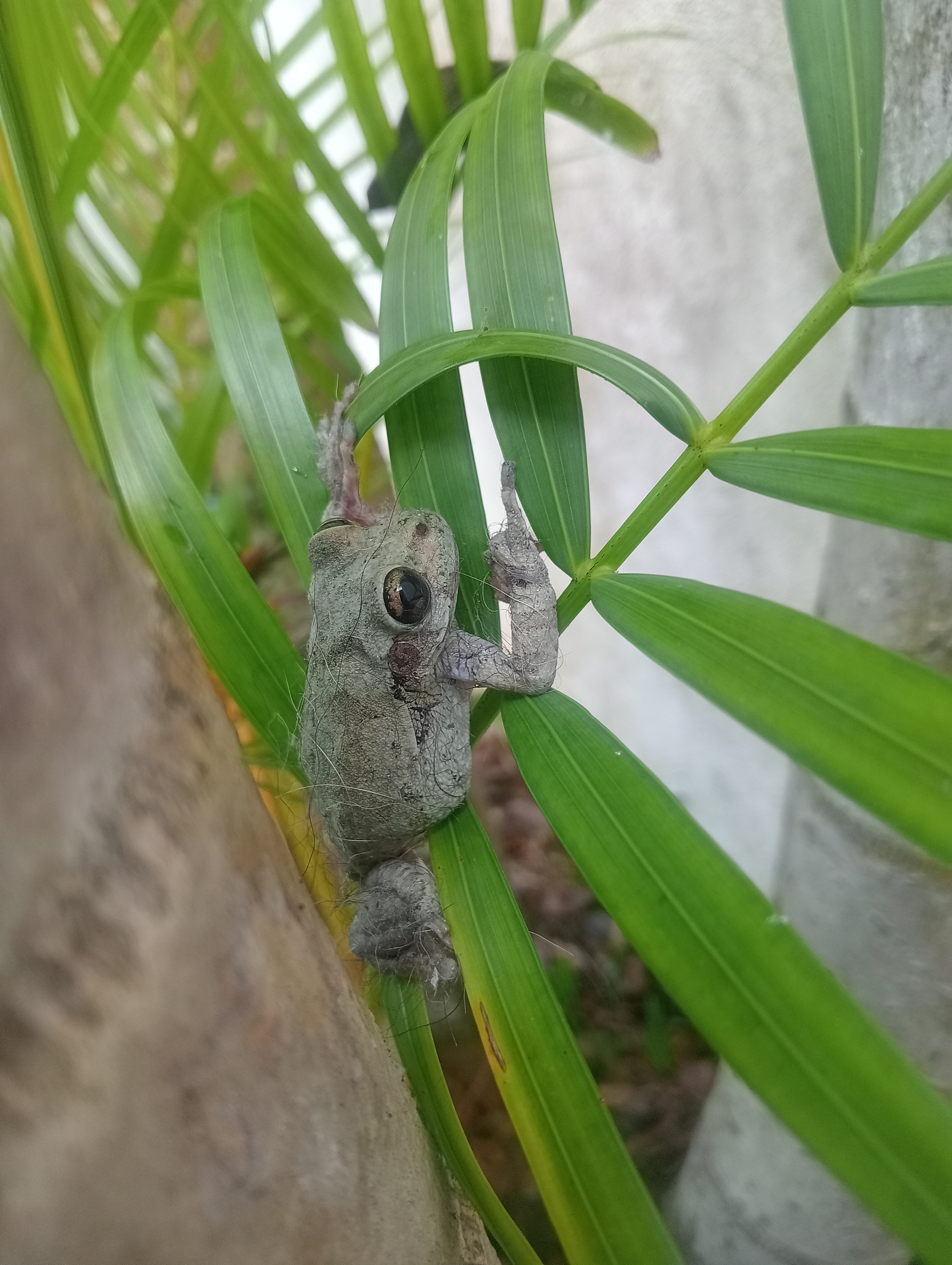
This morning brought an unexpected visitor inside the house here in Puerto Morelos—a small tree frog perched calmly on the wall as if it lived here. Alberto immediately took a liking to it and named it Fred. I'm used to seeing them in the garden, but finding one inside was still a surprise.
Rather than trying to grab it by hand and risk startling it and getting pee'd on, I coaxed it gently into a small empty trash can. Once it hopped in, I carried it outside to the garden and let it go on a palm trunk. The moment it found something familiar to cling to, it settled right in and disappeared into the greenery like it belonged there all along.
---
The Mexican Tree Frog (Smilisca baudinii), commonly found in the Yucatan Peninsula including Puerto Morelos, is a fascinating amphibian that has perfectly adapted to both urban and natural environments. These remarkable creatures can often be found in gardens, on building walls, and around outdoor lighting where they hunt for insects. Their ability to climb vertical surfaces comes from specialized adhesive pads on their toes, allowing them to navigate smoothly across various surfaces including glass and painted walls.
These nocturnal amphibians typically grow to about 2.5 to 3 inches in length, with females being slightly larger than males. They display a remarkable variety of colors, ranging from bright green to brown, and can even change their coloration to match their surroundings. A distinctive feature is their large golden or bronze-colored eyes, which help them spot prey in low-light conditions.
The diet of Mexican Tree Frogs consists primarily of insects and other small invertebrates. They are particularly fond of moths, flies, and beetles that are attracted to outdoor lights, making human settlements an attractive hunting ground. During the day, they find refuge in dark, moist places such as tree hollows, bromeliads, or spaces between leaves, emerging at night to feed and socialize.
Their natural range extends from southern Texas through Mexico and Central America, reaching as far south as Costa Rica. In the Yucatan Peninsula, they are particularly well-adapted to the tropical climate and can thrive in both undisturbed forest areas and developed regions. During the rainy season, their distinctive calls can be heard as males gather near temporary water bodies to attract mates.
While many amphibian species face challenges due to habitat loss and climate change, the Mexican Tree Frog has maintained stable populations throughout most of its range. Their adaptability to human-modified environments has helped them persist even in developed areas. However, like all amphibians, they are sensitive to environmental changes and serve as important indicators of ecosystem health. The presence of these frogs in urban gardens and homes, like my unexpected visitor, is generally a positive sign indicating a healthy local environment with sufficient green spaces and insect populations to support them.
Comments (0)
Log in to leave a comment.
No comments yet. Be the first to comment!