📍 Parque Nacional Arrecife de Puerto Morelos
Hidden Treasures: The Secret Life of Mooring Systems
As a diver, I've always been fascinated by the hidden infrastructure beneath the waves that most beachgoers never see. Today, I want to share with you one of the most overlooked yet fascinating features of our swimming areas: the mooring systems that keep our navigation buoys in place.
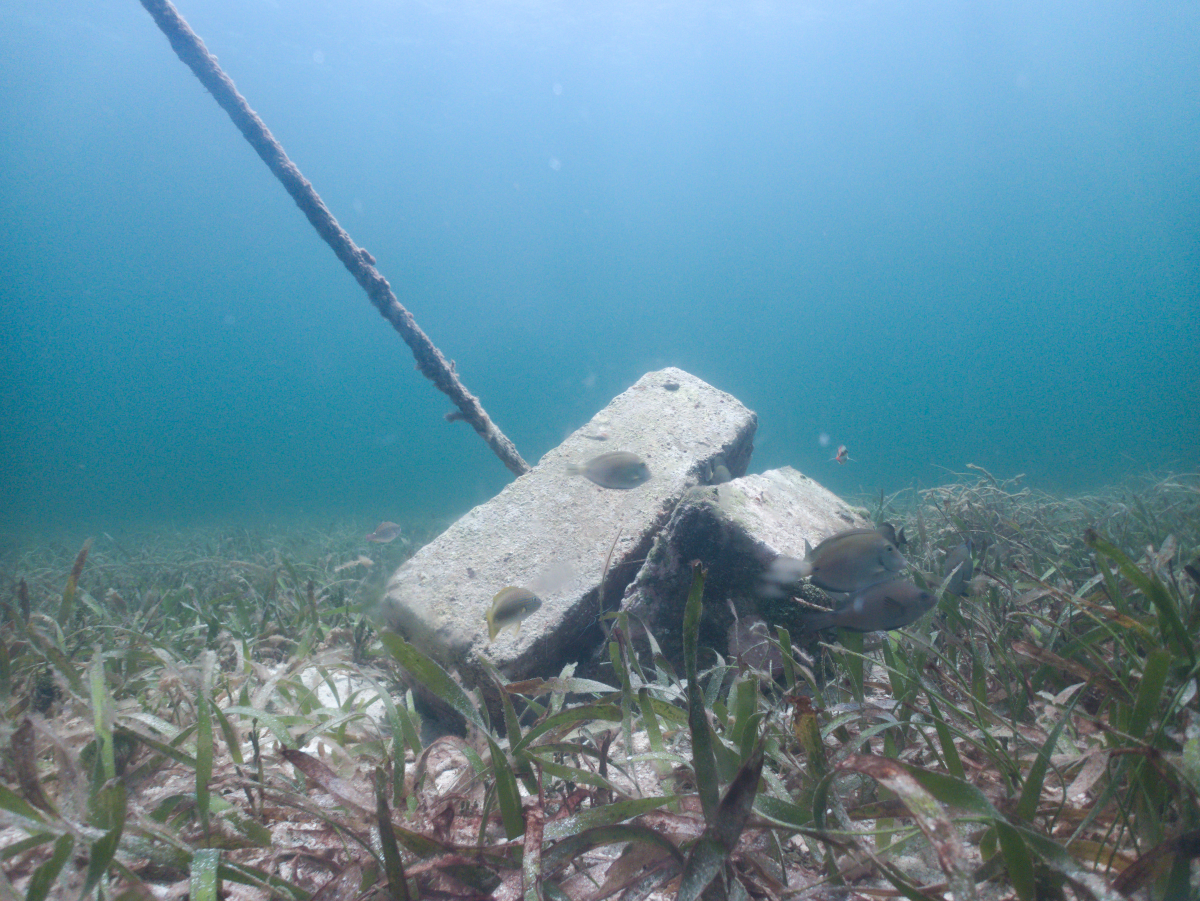
During a recent dive, I captured an image of one of these underwater anchoring systems, and it tells a remarkable story of how human infrastructure can become an integral part of marine life. These concrete blocks and chain systems, while purely functional in design, have evolved into vibrant micro-ecosystems that support an impressive array of marine life.
What starts as a simple concrete block or metal anchor transforms over time into what we divers like to call a "mini reef." The moment these structures are placed on the seafloor, they begin their journey from stark industrial objects to thriving marine habitats. Marine organisms don't discriminate between natural and artificial structures – they see real estate as real estate.
When I dive to inspect these moorings, I'm always amazed by the diversity of life I encounter. Small corals gradually establish themselves on the concrete surfaces, creating the foundation for a complex ecosystem. Tiny fish dart in and out of the chain links, using them as protective hiding spots. The rope or chain that extends up to the surface becomes a vertical highway for marine life, with different species occupying different levels of the water column.
What I find particularly interesting about these mooring systems is how they create their own unique ecological zones. At the base, where the anchor meets the seafloor, you'll often find bottom-dwelling species like gobies and blennies making their homes. The middle section of the chain often attracts schooling fish that use it as a reference point, while closer to the surface, you might find juvenile fish using the upper portions for protection.
These structures serve a dual purpose that most people never consider. While their primary function is to keep our swimming zones safe and well-marked, they've become essential components of our local marine ecosystem. In areas where natural reef structures might be sparse, these artificial anchor points provide crucial habitat connectivity, allowing marine life to hop from one mooring to another like stepping stones across the seafloor.
Finding these moorings while diving is always an adventure. They're like underwater treasure hunts, each one potentially hiding its own unique collection of marine residents. Sometimes I'll spend an entire dive just circling one of these structures, watching the intricate interactions between different species that have made it their home.
What strikes me most is how nature has this remarkable ability to adapt and thrive, turning our utilitarian structures into vibrant oases of life. It's a beautiful reminder that even in our attempts to organize and safety-proof our marine environments, we can inadvertently create spaces that enhance marine biodiversity.
Next time you're swimming in a marked zone or passing by a navigation buoy, remember that beneath the surface, there's a whole world of life clustering around the very infrastructure that keeps that marker in place. It's just another one of the ocean's many secrets, hidden in plain sight.
Comments (0)
Log in to leave a comment.
No comments yet. Be the first to comment!